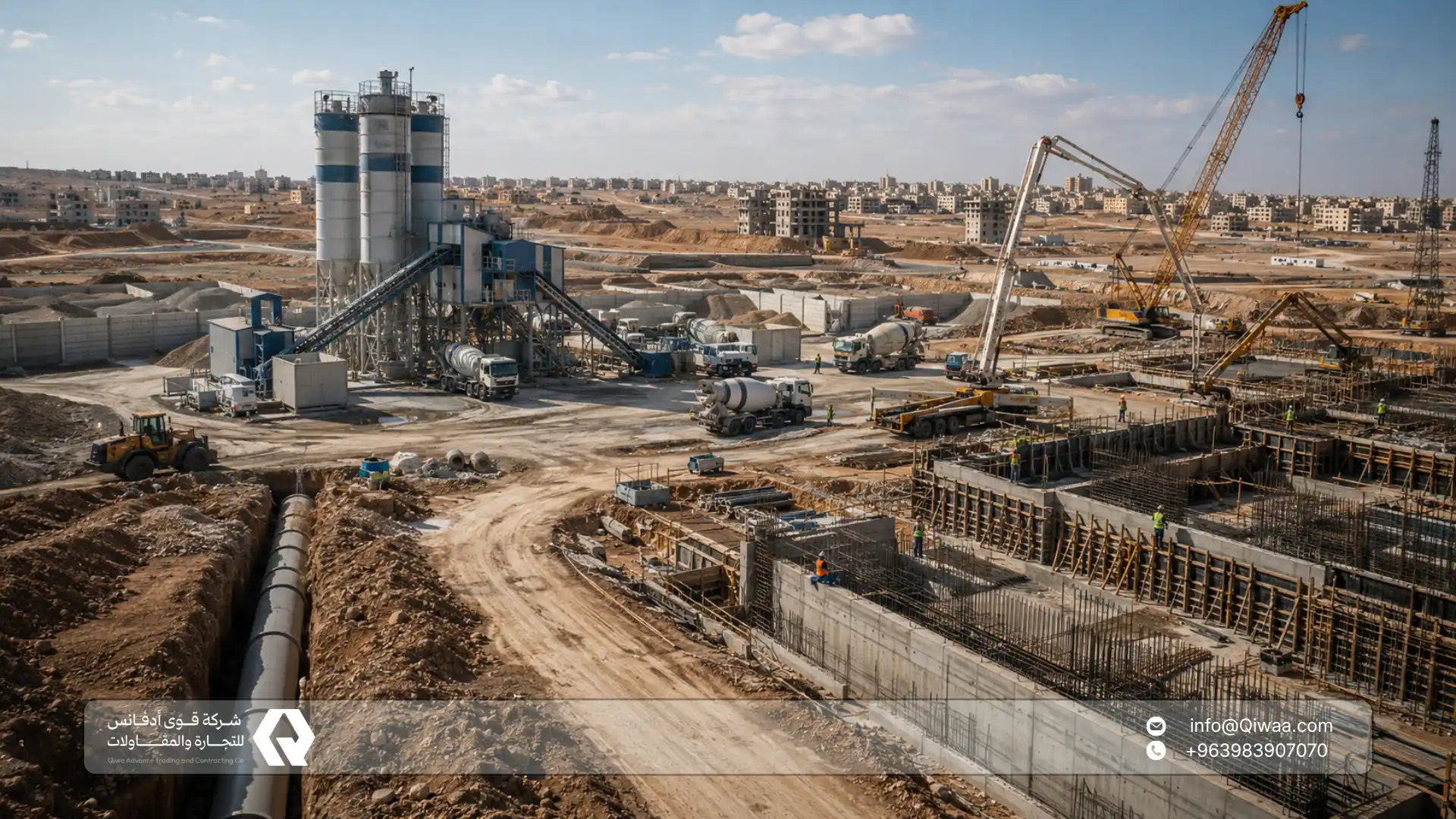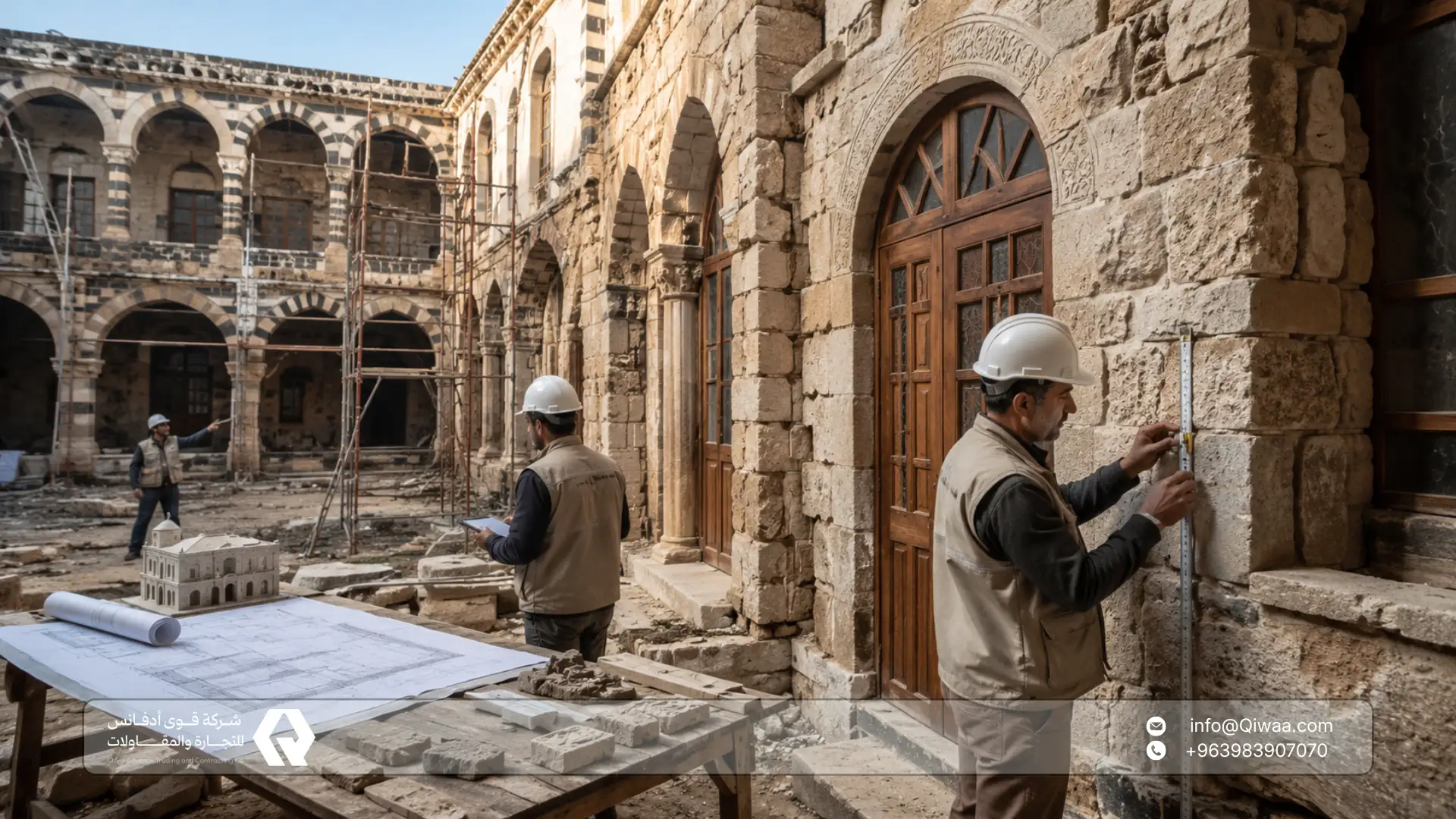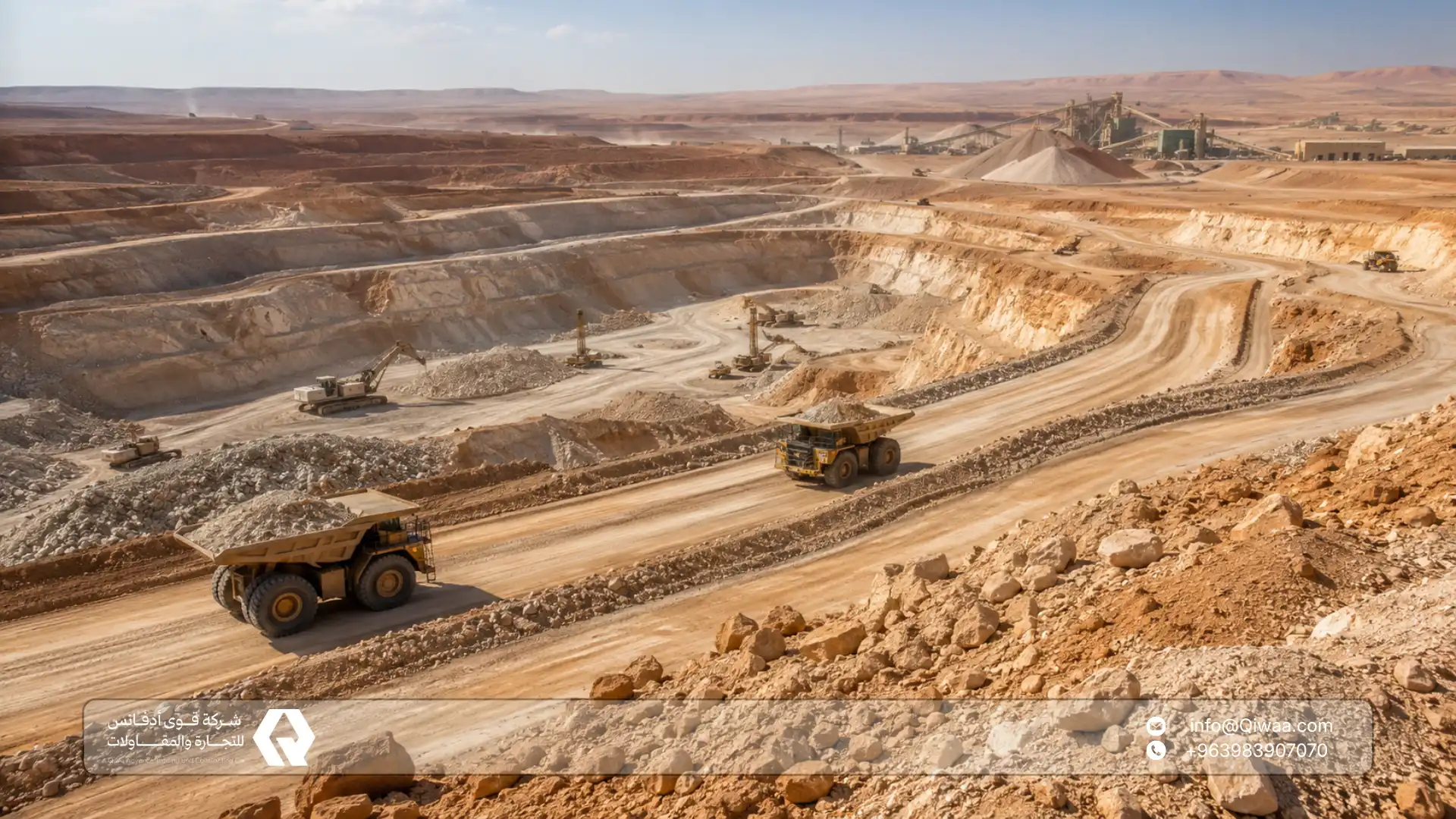


In cement supply, the problem is no longer just finding available material. For contractors and developers in Syria, the real challenge is securing the right cement type, keeping supply stable across project stages, controlling transport and delivery conditions, and avoiding delays that can disrupt execution and increase cost.
In this guide, we explain what matters most when buying cement in Syria in 2026, how to read cement prices beyond the number per ton, how to compare local and imported options, and what to review before choosing a supplier.
We also show how Qiwaa Advance helps projects organize cement supply more clearly, connect it to execution needs, and make purchasing decisions with greater confidence.
Why Cement Supply in Syria Matters More in 2026?
Cement supply in Syria has become a more sensitive issue in 2026 because the market is no longer driven only by price or basic availability. For contractors and developers working in the Syrian market, the real question is whether cement can be supplied in the right type, in the right quantities, and at the right time to support project execution without disruption.
This matters even more as reconstruction activity, plant rehabilitation, import support, and new market interest continue to reshape supply conditions across Syria. In this environment, cement is no longer a routine purchasing item. It is a strategic material that directly affects casting schedules, labor continuity, subcontractor coordination, project cost, and the ability to keep work moving from one stage to the next.
For this reason, contractors and developers are no longer looking only for fast cement supply. They are looking for supply they can build a project around. That means clearer specifications, stronger continuity, scheduled withdrawals linked to execution stages, and a supplier that can respond when local availability changes or market pressure increases.
In practice, fluctuating local supply and continued reliance on imported inputs such as clinker have made purchasing decisions more cautious in Syria. Buyers can no longer assume that availability will remain stable throughout the full project duration. As a result, the stronger purchasing approach today is to review supply plans more carefully, diversify sources where needed, and work with suppliers who can offer clearer delivery schedules and more dependable alternatives if conditions change.
In other words, reading the cement market in Syria is now part of reading the project itself. If your project needs cement supply with clearer planning, phased delivery, and better alignment with execution needs, Qiwaa Advance can help you build a more reliable supply approach from the start.
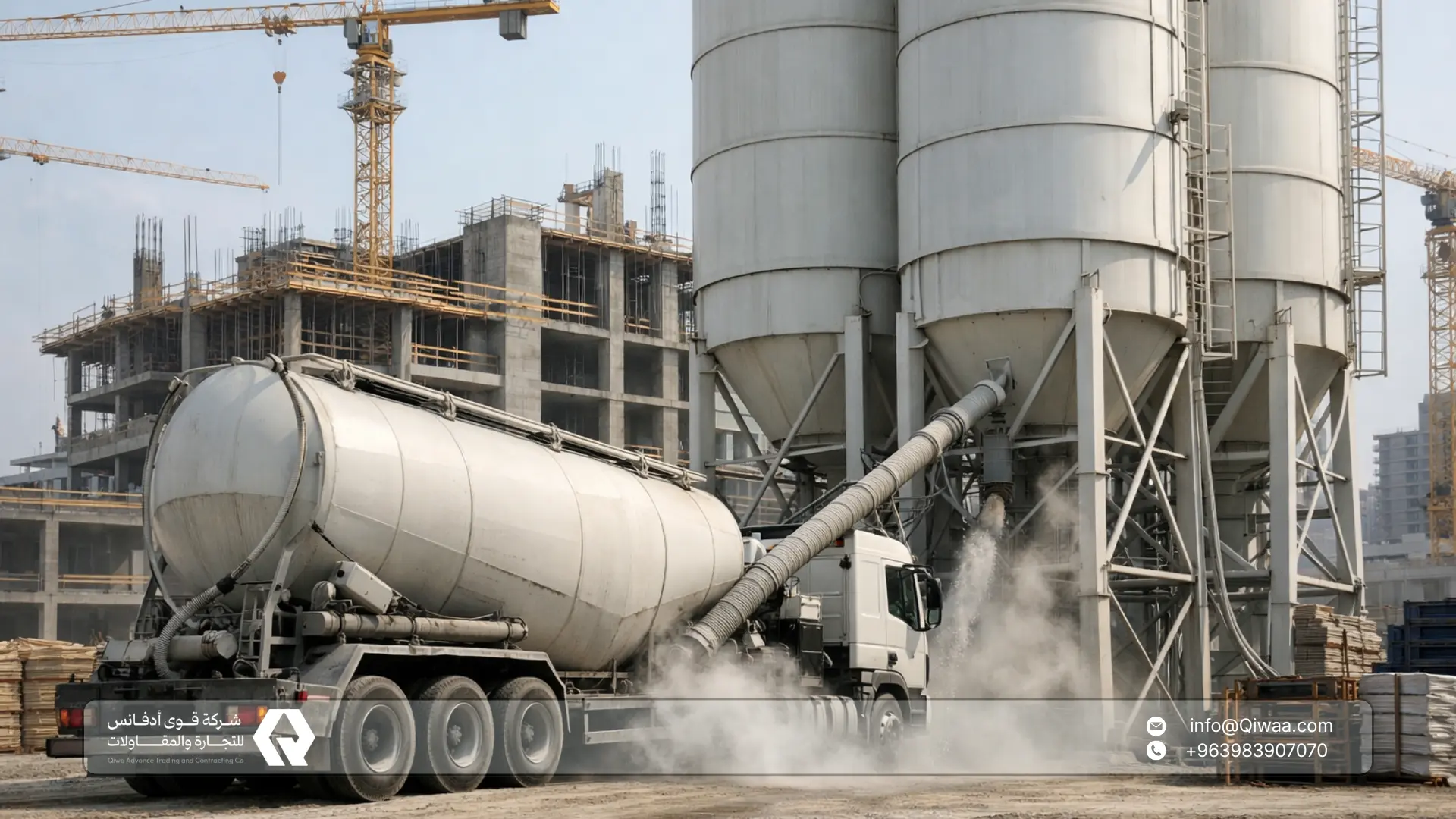
Why Al Jouf Cement Is a Practical Supply Option in Syria?
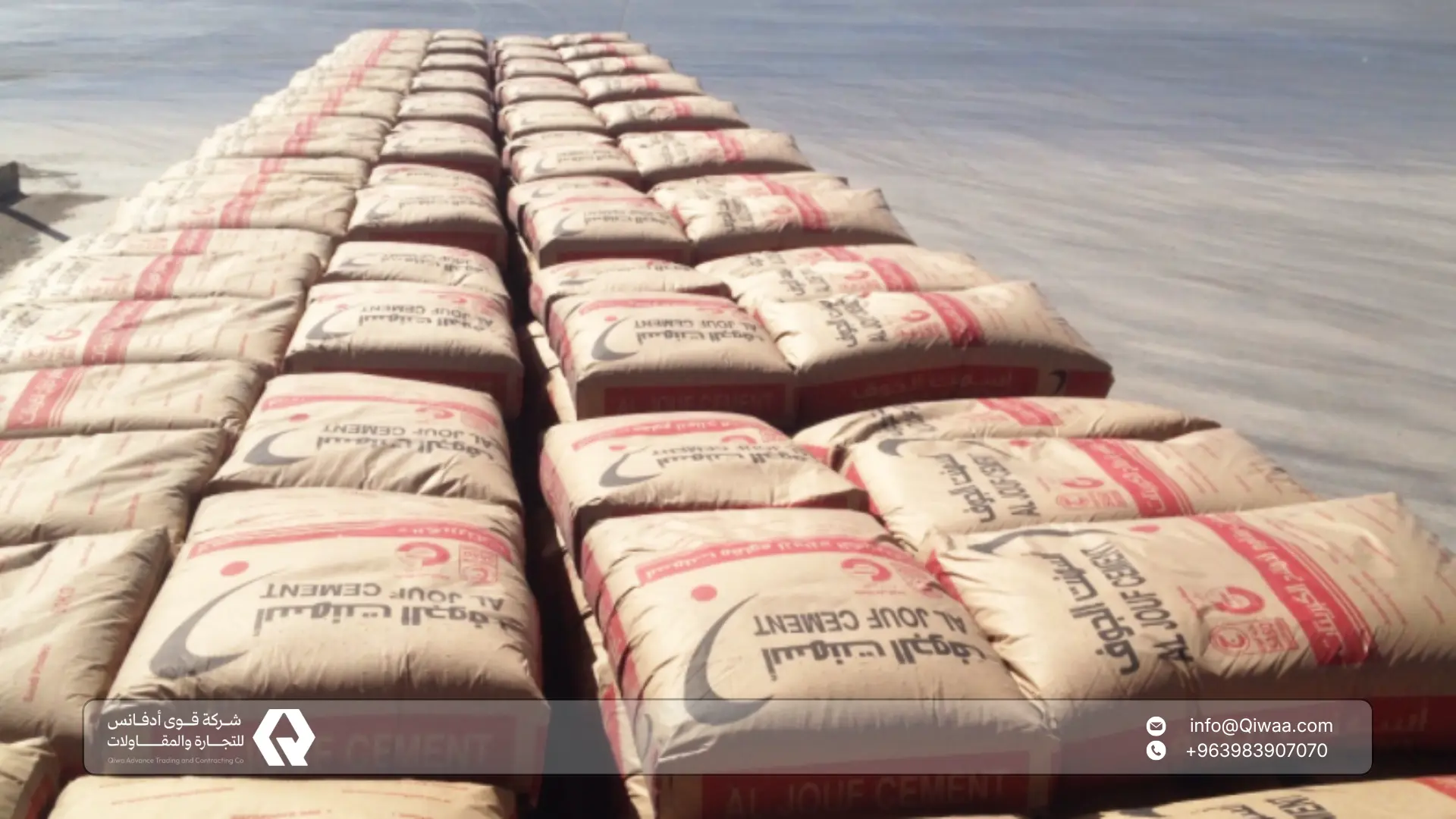
Al Jouf Cement is a practical option for projects in Syria because it gives contractors and developers more than one cement type for different project conditions, instead of forcing the project to rely on one general product for every use.
Its range includes ordinary Portland cement, sulfate-resistant cement, Super 20, and finishing cement, which helps the buyer match the product to the actual requirement of the work.
What matters in practice is not the brand name alone, but what this gives the project:
- clearer technical approval through recognized Gulf and American standards
- more reliable supply planning through a product range that covers structural, sulfate-resistant, low-heat, and finishing needs
- better fit for different project conditions instead of using one cement type across all applications
- stronger confidence in quality consistency through certified production and recognized quality systems
- more suitable performance in specific uses, such as sulfate-rich environments, large pours, or finishing works
For contractors and developers, this means a clearer purchasing decision and a better chance of linking cement choice to actual project needs from the start.
At Qiwaa Advance, we help you turn that into a practical supply decision by identifying the right Al Jouf Cement type for your project and organizing supply in a way that supports your execution schedule, quantities, and site conditions.
What Actually Determines Cement Supply Cost in Syria in 2026?
In 2026, the real cost of cement supply in Syria is not defined by the price per ton alone. What matters is the full supply structure behind that number: source, cement type, delivery point, transport route, unloading method, quantity, and withdrawal schedule.
For contractors and developers, the right price is not the lowest quoted number. It is the price that can actually support project execution without causing delays, supply gaps, or extra handling costs later.
Here are the main factors that change the final price:
1. Source, Delivery Route, and Transport Handling
Transport and logistics can significantly change the final cement cost, especially when supply depends on longer distances, multiple handling points, or route changes.
In practical terms, the final price is affected by:
- distance from source to project
- number of loading and unloading points
- border crossing or route conditions
- whether material moves directly or through transfer stages
This means that two offers with a similar source price may still end up with different final costs once delivery is included.
2. Quantity and Withdrawal Schedule
Large, scheduled supply is not priced the same way as small, urgent, or irregular orders.
The quotation changes depending on:
- total quantity
- whether supply is one batch or phased
- how clearly the withdrawal schedule is defined
- how easy it is for the supplier to plan delivery in advance
The more organized the schedule, the easier it becomes to control the quotation and compare it properly.
3. Payment Terms and Delivery Responsibility
Payment method also affects the final supply cost, especially in project-based procurement.
Price can vary depending on:
- immediate or deferred payment
- whether delivery is to warehouse or site
- who carries transport and unloading costs
- how delays or handling issues are treated in the offer
That is why two quotations for the same cement type may differ even when the material itself is the same.
In the Syrian market, reading cement prices correctly means looking beyond the ton price and reviewing the full delivery structure behind the offer.
At Qiwaa Advance, we help contractors and developers evaluate cement quotations on this basis, so the decision is built on real execution cost, not only on the first number shown in the offer.
How to Choose the Right Cement Supplier in Syria
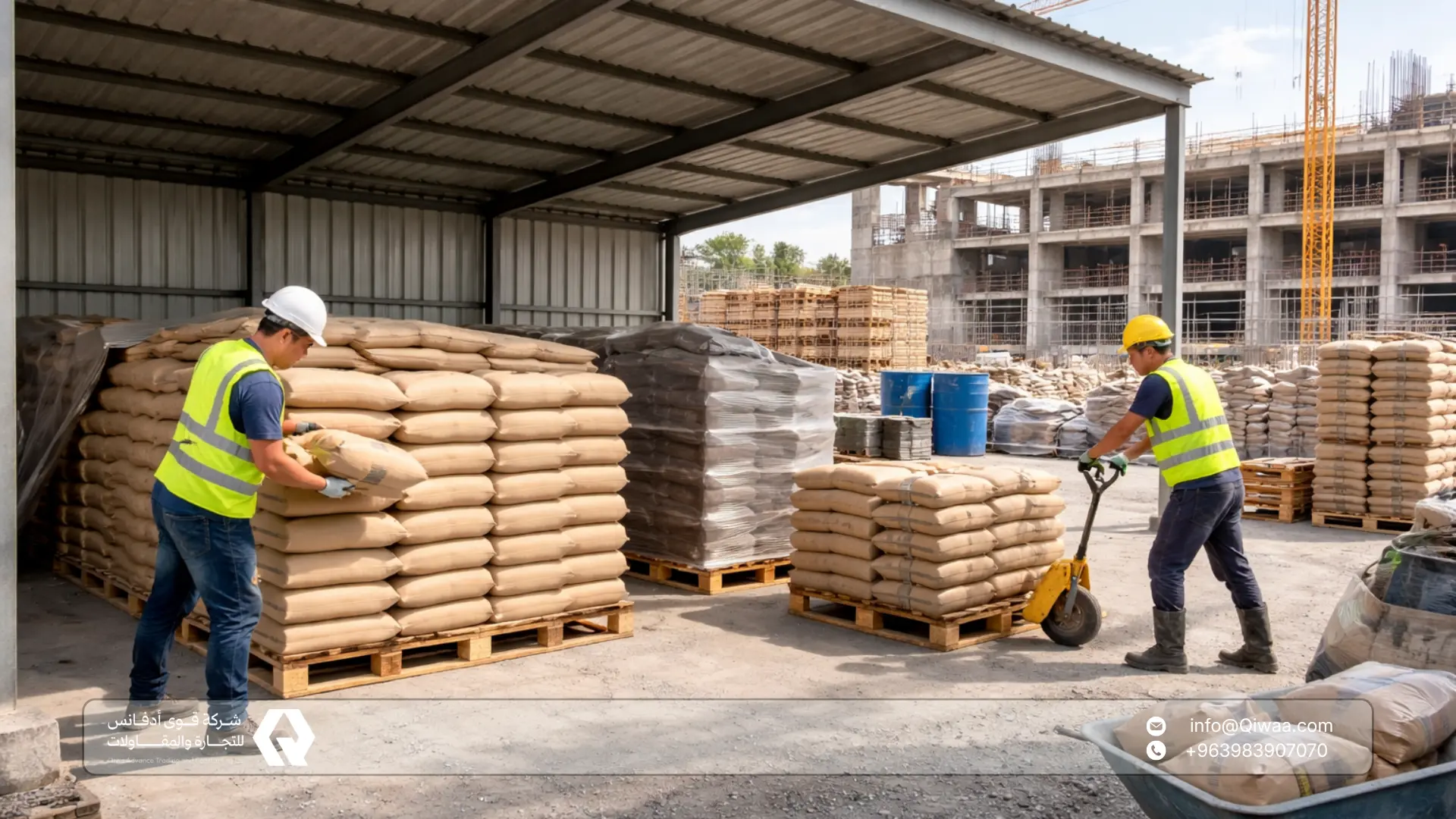
Choosing a cement supplier in Syria should not be based on price alone. The right supplier is the one that can provide the correct cement type, maintain quality between batches, and deliver in a way that supports the project schedule rather than disrupting it.
Before approving any supplier, check the following points:
- Clear cement source
The quotation should clearly state the factory or producer. Do not rely on offers that leave the source unclear. - The right cement type for the project
Confirm from the start whether the project needs ordinary cement, sulfate-resistant cement, finishing cement, or another specific type. A good supplier helps match the product to the actual use. - Consistency between batches
If supply is phased, the source, type, and quality level should remain consistent from the first batch to the last. - Ability to cover the full requirement
The supplier should be able to support the project beyond the first delivery, especially in medium and large projects. - Commitment to timing
What matters is not only availability, but whether delivery can be linked to the execution program and pouring schedule. - Clear delivery responsibility
The offer should define whether supply is from warehouse or to site, and who carries responsibility for transport, unloading, damage, delay, or replacement. - Flexibility in phased delivery
Most projects do not need one single quantity at once. They need scheduled batches that match actual progress on site. - Clear technical and commercial documents
The supplier should provide product type, source, technical data, delivery terms, and a quotation that can be compared properly.
In practical terms, the best cement supplier is the one that supports execution, not just sales. At Qiwaa Advance, we help contractors and developers review these points early so the supply decision is built on project need, quantity planning, and delivery clarity from the start.

What Should a Cement Supply Offer Include?
A proper cement quotation should not stop at the price per ton. It should give you enough detail to compare offers, approve the order, and link supply to actual project execution.
A strong supplier offer should clearly include:
- cement type
- factory or source name
- supply format: bagged or bulk
- quantity
- delivery point
- whether transport is included
- delivery period
- payment terms
- whether supply is one batch or phased
- replacement mechanism in case of damage or error
- how delays will be handled if they occur
The clearer the quotation, the easier it becomes to compare suppliers fairly and avoid problems later in transport, timing, or product suitability.
If you need a cement supplier in Syria that offers clearer quotations, more reliable batch planning, and supply that fits actual execution, Qiwaa Advance can help you structure the right supply approach for your project.
Common Mistakes When Choosing a Cement Supplier in Syria
Choosing a cement supplier in Syria can affect cost, schedule, and supply stability more than many buyers expect. In many cases, the problem is not the cement itself, but how the supplier is selected and how the supply is organized.
| Common mistake | The problems | How to avoid it |
| Choosing based on price alone | A low price per ton may hide unclear source, wrong cement type, or extra transport and unloading costs later | Compare quotations only after confirming source, type, delivery point, and whether transport and unloading are included |
| Ordering cement without confirming the right type | A general order may result in cement that does not match the project’s structural or environmental requirements | Confirm the required cement type from the start and match it to the actual use |
| Working with a supplier that cannot commit to quantities or timing | Weak delivery commitment can directly disrupt pouring schedules and site progress | Choose a supplier that can provide a clear supply plan linked to execution stages |
| Accepting an unclear quotation | Brief offers create confusion later about quantity, delivery, timing, or payment | Approve only quotations that clearly state type, source, quantity, delivery point, delivery period, transport terms, and payment method |
| Ignoring source and batch consistency | Changing source or quality level between batches can create approval and execution problems | Confirm that the source and quality level can remain consistent throughout phased supply |
| Buying large quantities without a withdrawal plan | Unplanned bulk orders can create storage pressure, waste, and handling risks | Link supply to the actual progress of work and agree on phased delivery when needed |
| Overlooking transport and unloading responsibility | Problems may appear later in delivery, unloading, damage, or delay | Clarify in advance who is responsible for transport, unloading, damage, delay, and replacement |
| Choosing a seller instead of a project-focused supplier | A seller may supply material, but fail to support execution needs | Work with a supplier that understands project timing, quantities, and execution requirements |
At Qiwaa Advance, we help contractors and developers avoid these mistakes by building cement supply around actual project needs, clear quotations, phased delivery, and stronger coordination from the first batch to the last.
Why Projects Work with Qiwaa Advance for Cement Supply in Syria?
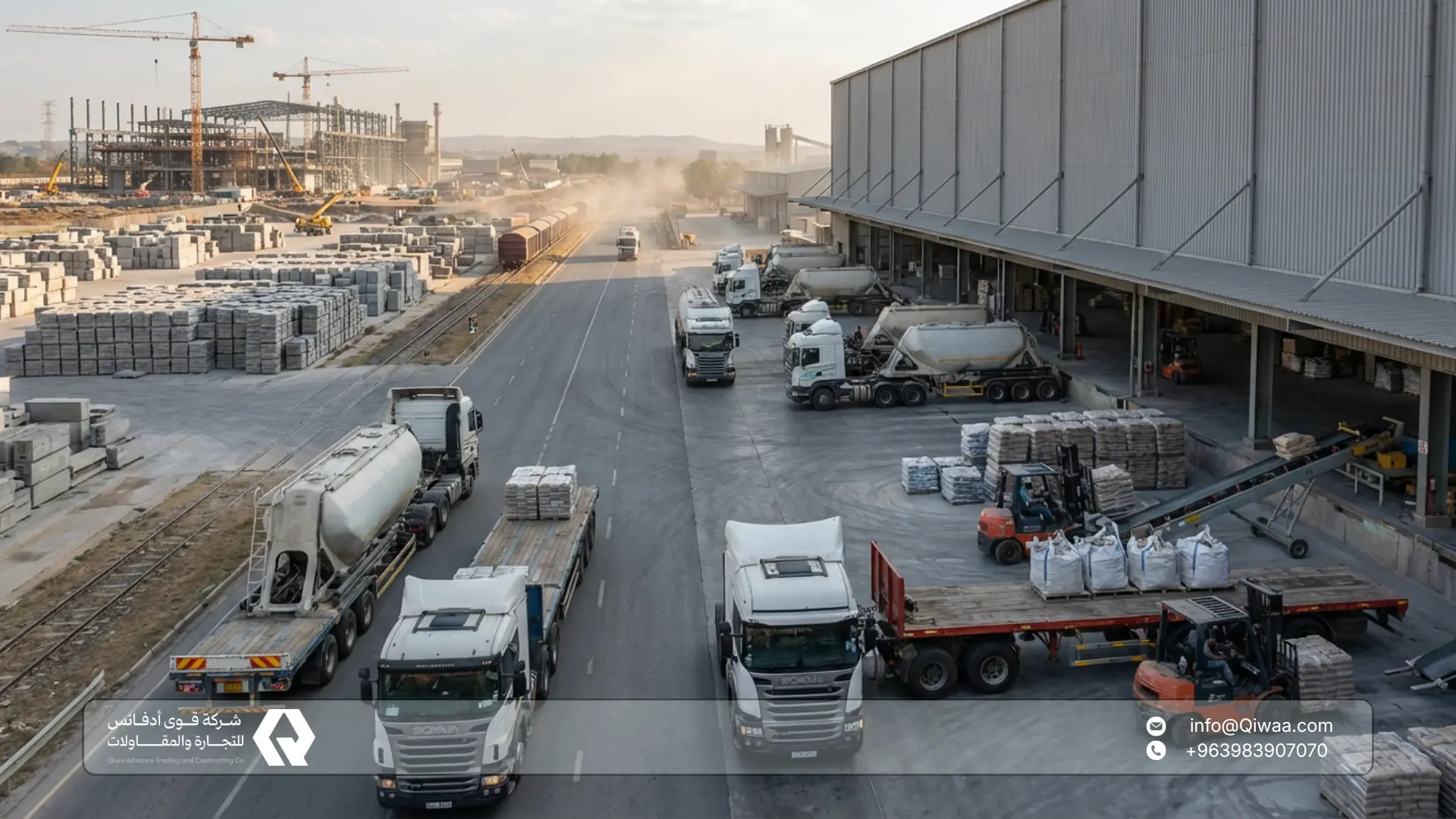
At Qiwaa Advance, we do not treat cement supply as a standalone sales transaction. We treat it as part of the project’s execution system, where the right type, the right quantity, and the right delivery timing all affect site progress and cost control.
What gives our clients more value is not only access to cement but also a supply approach built around actual project needs.
- Project-based supply planning: We start from the project itself: type of work, quantity needs, withdrawal stages, and delivery conditions.
- Supply linked to execution: We help organize cement deliveries in a way that supports actual site progress and reduces unnecessary storage pressure or supply gaps.
- Support across different project types: We work with residential, commercial, infrastructure, and industrial projects, which helps us adapt the supply approach to the actual use.
- Broader construction material coordination: Because cement often moves together with other materials, we help clients reduce coordination complexity by supporting a wider supply scope where needed.
- More flexibility for contractors and developers: We know that quantities, timing, and delivery priorities can change during execution, so we work with more flexible follow-up and phased supply planning.
If your project needs cement supply in Syria with clearer planning, better coordination, and quantities linked to execution reality, Qiwaa Advance can help you build the right supply approach from the start.
FAQs About Cement Supply in Syria in 2026
1. Which is better for my project: local or imported cement?
That depends on the project type, required specification, schedule sensitivity, and supply stability in your area. The right choice is the one that gives the project better continuity and a clearer fit with execution needs, not simply the one that appears cheaper at first.
2. Can Al Jouf Cement be supplied in Syria?
Yes, depending on availability, supply planning, and the required product type. At Qiwaa Advance, we help clients review whether Al Jouf Cement is the right fit for the project and organize supply accordingly.
3. What is the minimum cement order?
The minimum order depends on project location, supply format, transport route, and whether delivery is direct or phased. The practical quantity is the one that fits execution and remains commercially workable.
4. What makes a strong cement supplier in Syria?
A strong supplier is one that offers more than material availability. What matters is clarity of source, consistency between batches, commitment to timing, and the ability to tie supply to the project schedule.
5. How should I choose a cement supply company?
Choose the company that clearly states the cement source and type, provides a detailed quotation, can support phased delivery, and understands the execution needs of the project rather than offering a generic sales quote.
If you need cement supply in Syria with a clearer quotation, more flexible delivery planning, and stronger alignment with execution needs, Qiwaa Advance can support you from the first batch to the last