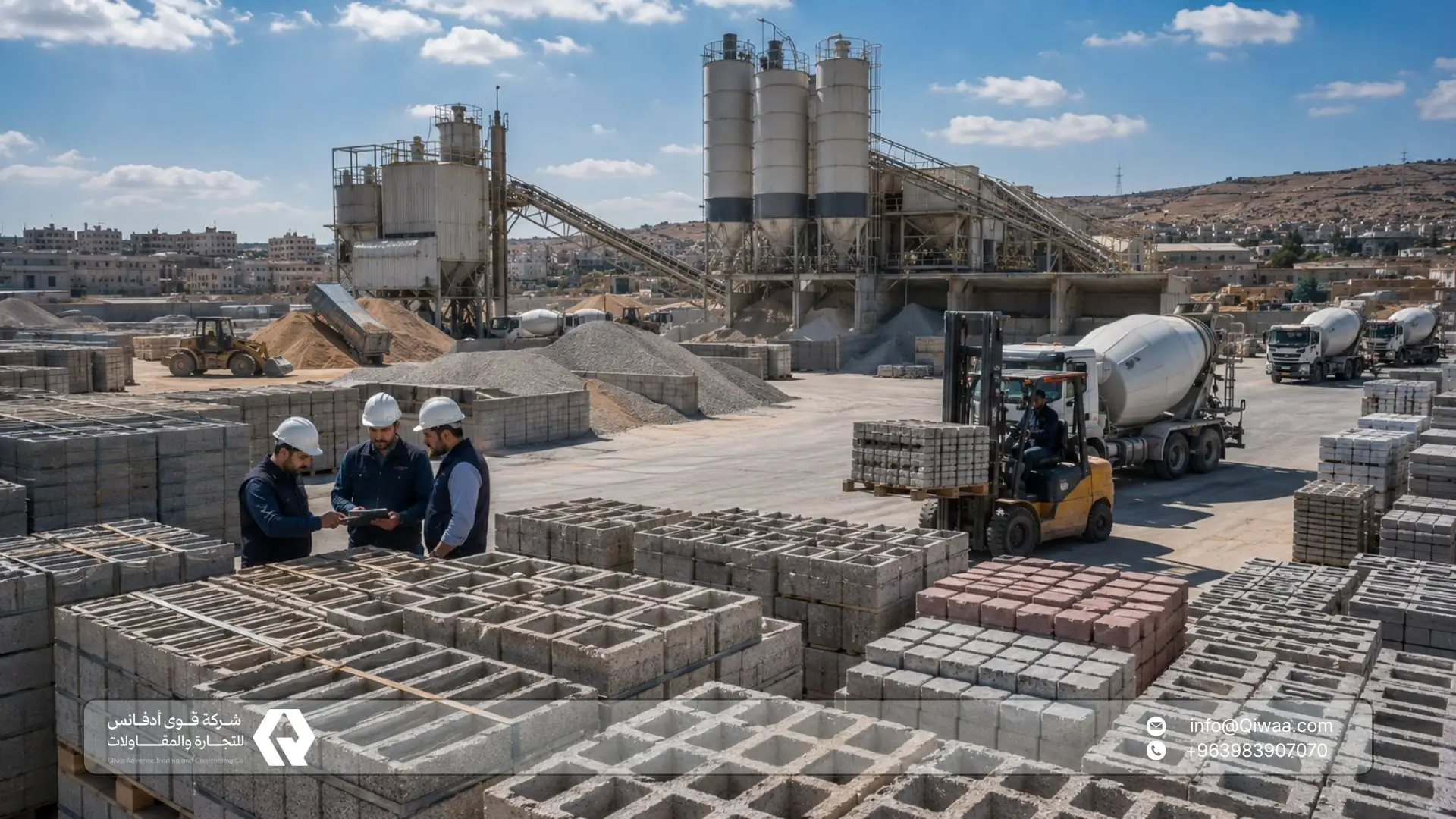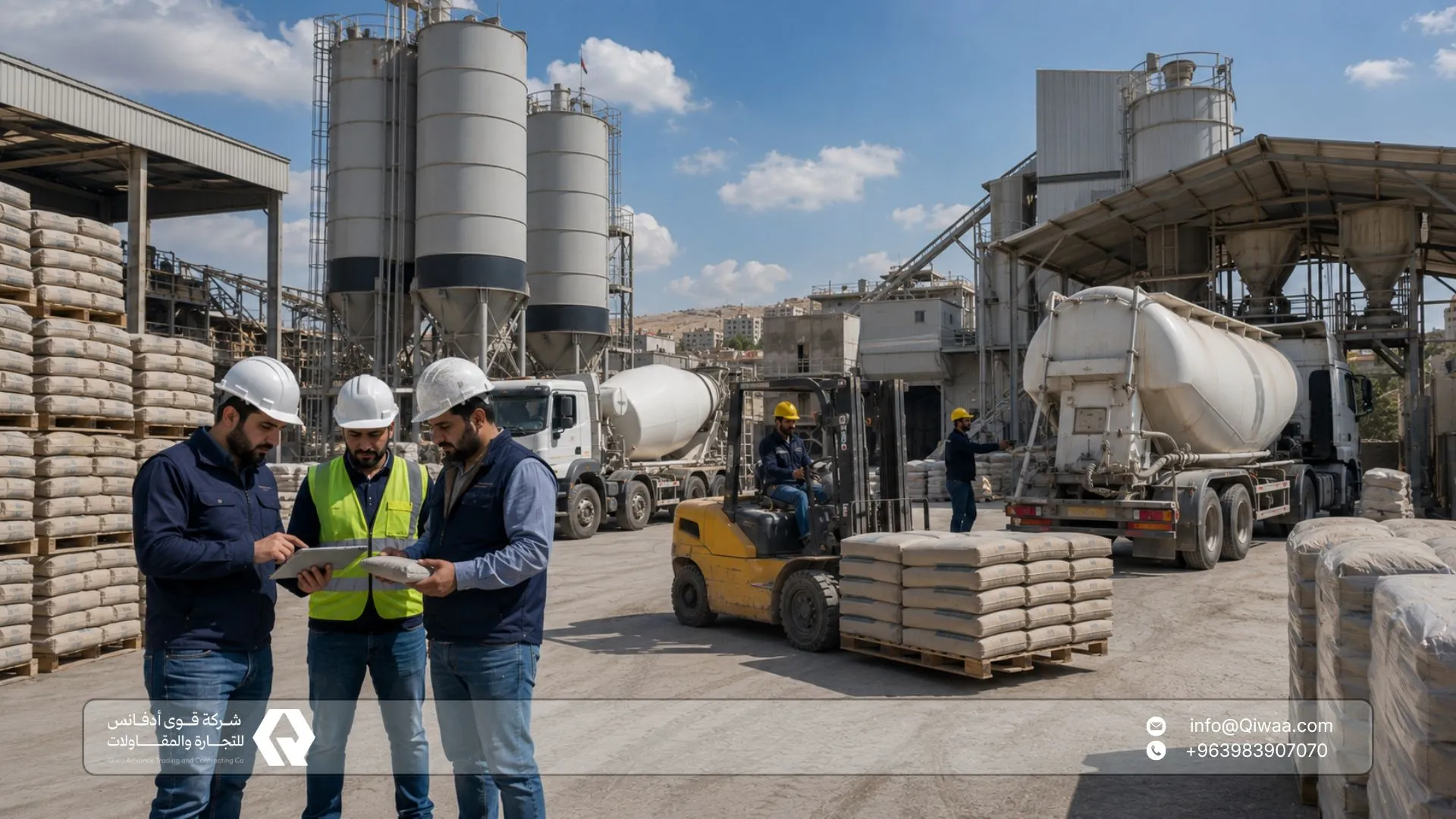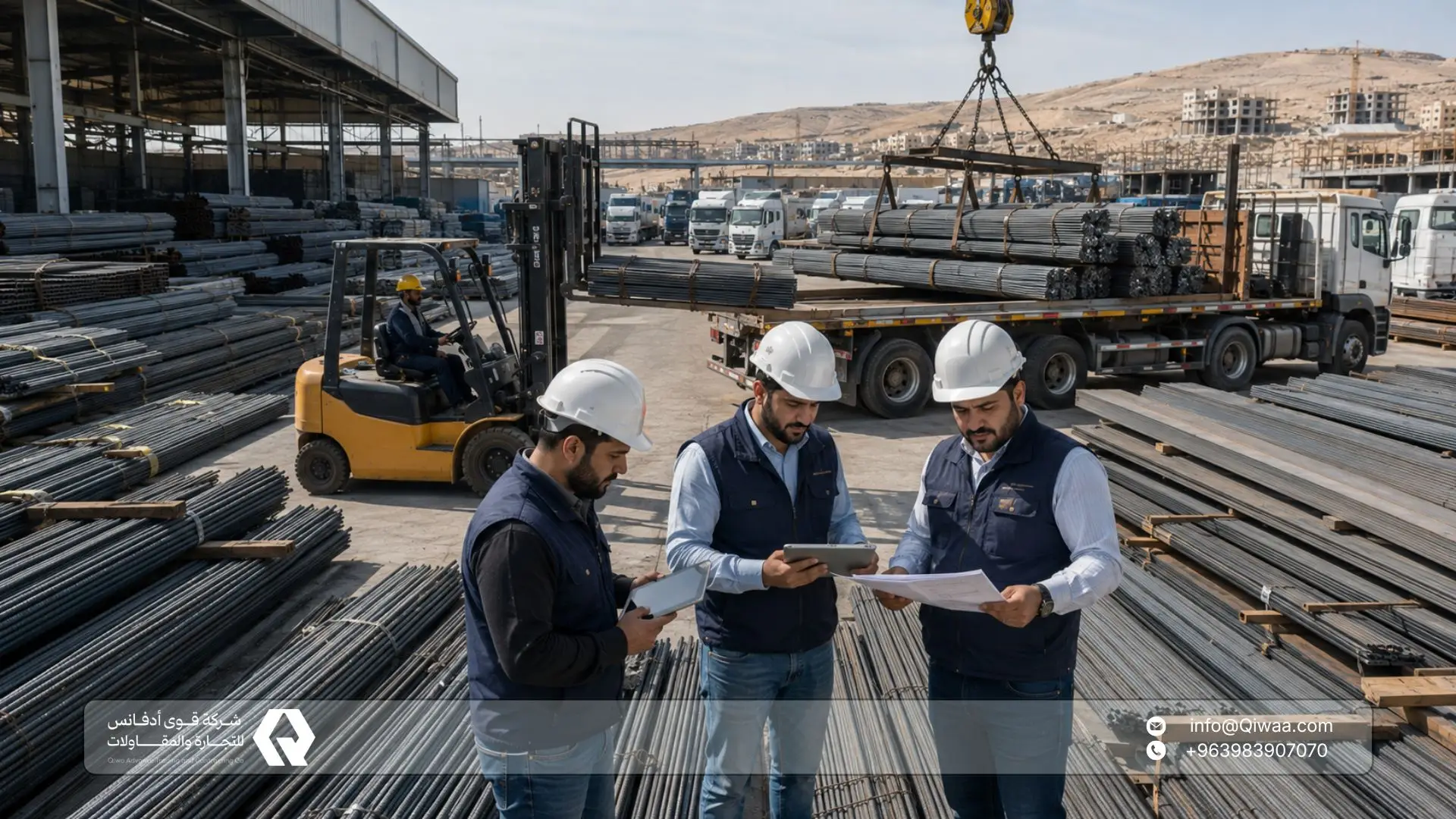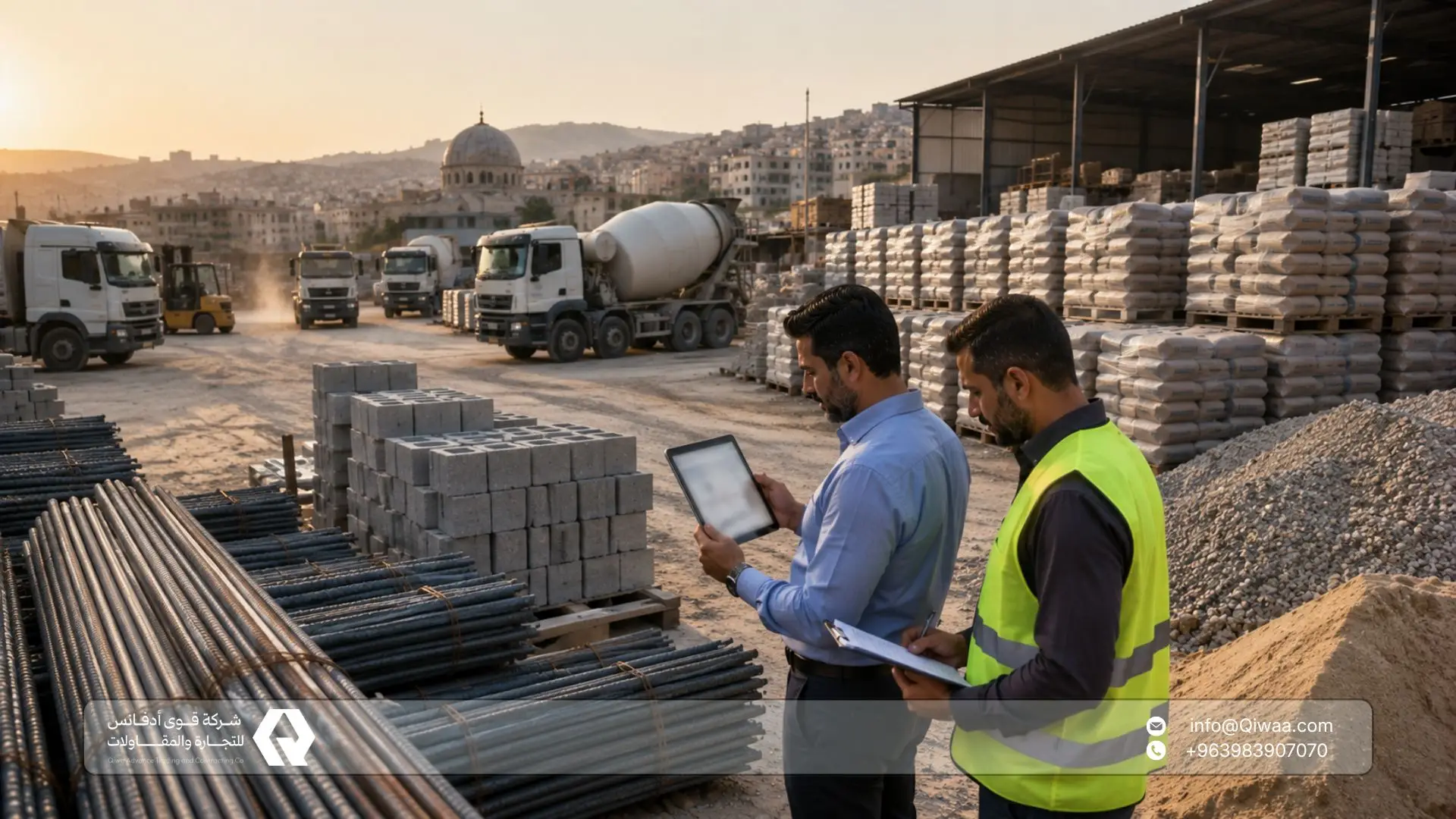


A construction or reconstruction project in Syria can look viable on paper yet become difficult to execute when the site, contractor, and material supply are assessed separately. Whether you are rehabilitating an existing building or planning a new development, understanding reconstruction and building materials in Syria starts with defining the project’s requirements, budget, and execution responsibilities before work begins.
This guide explores Syria’s construction and reconstruction sector, including project opportunities, contracting and reconstruction companies, building materials in Syria and their pricing, and the engineering and construction services involved. It also explains how to evaluate contractors, assess project readiness, and approach construction planning so that project owners, investors, and contractors can make more informed decisions before committing to a project.
Syria’s construction and reconstruction sector in 2026
The market for reconstruction and building materials in Syria spans the rehabilitation of damaged buildings, the restoration of essential infrastructure, and new construction and development projects. These activities create different requirements for materials, contractors, engineering services, and investment, while the readiness of individual projects varies according to their location, funding, and implementation conditions.
The scale of reconstruction needs is substantial. In its 2025 assessment covering damage from 2011 to 2024, the World Bank estimated USD 216 billion in costs to rebuild and repair Syria’s damaged physical assets, including USD 82 billion for infrastructure, USD 75 billion for residential buildings, and USD 59 billion for non-residential structures. These figures describe the estimated scale of reconstruction needs, not a confirmed pipeline of funded projects.
Within this broader picture, the Syrian construction sector covers several interconnected areas of activity:
- Building rehabilitation and reconstruction: Repairing, strengthening, or replacing damaged residential, commercial, and public buildings according to their assessed condition and approved requirements.
- Infrastructure rehabilitation and development: Works involving roads, water supply, sewerage, electricity, and other essential service networks.
- Residential and commercial construction: Developing new buildings and complexes, with requirements that differ according to their intended use, design, and scale.
- Building materials supply and manufacturing: Sourcing and producing cement, reinforcing steel, concrete products, aggregates, piping, and other materials required for construction and infrastructure works.
- Real estate development and construction investment: Financing and developing projects through direct investment, partnerships, or other arrangements, subject to the readiness and requirements of each opportunity.
These activities are connected, but they do not progress at the same pace. A national need for reconstruction does not automatically translate into an approved construction project, an active contract, or an immediate order for building materials.
What are the main shifts in Syria’s construction market?
Syria’s construction market has seen increased participation in reconstruction exhibitions and new investment announcements, particularly in infrastructure, transport, and real estate development. These developments point to renewed commercial interest, although they do not establish how many proposed projects have secured financing or entered construction.
One indication is the growth in international exhibition participation. According to SANA, the Emaar 2026 reconstruction exhibition attracted 356 companies from 27 countries in September 2026, compared with 260 companies from 23 countries at the 2025 edition. The events brought together contractors, suppliers, manufacturers, developers, and potential investment partners.
Investment announcements provide another indicator. In August 2025, Reuters reported 12 investment agreements valued at USD 14 billion, including proposed projects involving Damascus airport, a metro system, and real estate development.
For companies and investors assessing construction projects in Syria, these developments have three practical implications:
-
Broader access to potential partners: Exhibitions and business meetings create opportunities to identify contractors, building material suppliers, manufacturers, and investors.
-
Greater visibility of major development proposals: Announced infrastructure and real estate initiatives help identify sectors attracting interest, but each project’s financing, approvals, and implementation status require separate verification.
-
A need to connect commercial opportunities with execution capacity: Before moving from an announced project to a construction commitment, investors and project teams must establish whether the required engineering, materials, contractors, and delivery arrangements are available.
The distinction between market interest and project readiness remains essential. An investment announcement or exhibition agreement is not, by itself, evidence that construction has begun.
Contracting and reconstruction companies in Syria
Construction companies in Syria serve different project requirements, from residential buildings and commercial developments to infrastructure works and the rehabilitation of damaged structures. Selecting a suitable company depends on the work it is qualified and equipped to perform, rather than whether it describes itself as a contractor or reconstruction specialist.
How to choose a contracting company in Syria
Before selecting a contractor, the project owner or procurement team should assess the company’s demonstrated capabilities against the project’s approved scope and technical requirements.
The main evaluation criteria include:
- Relevant project experience: Request evidence of completed projects similar in type, scale, and complexity, distinguishing new construction from rehabilitation or infrastructure work.
- Technical and operational capacity: Review the proposed site team, qualified personnel, equipment, subcontractors, and resources available for the required work.
- Licensing and contractual eligibility: Verify the company’s legal standing and any registration, classification, or authorization required for the specific contract.
- Quality and safety management: Assess inspection procedures, material quality controls, site safety arrangements, and how nonconforming work is identified and addressed.
- Execution and coordination capability: Examine how the contractor plans work sequences, manages subcontractor interfaces, reports progress, and handles approved design changes.
- Verifiable references and accountability: Check previous client references and confirm that the proposal clearly defines the contractor’s responsibilities, exclusions, deliverables, and completion obligations.
A suitable contractor is not necessarily the company offering the broadest range of services. It is the one that can demonstrate the capabilities and resources required for the agreed scope of work.
Contracting vs. reconstruction companies
The distinction is primarily about project scope and required expertise, not necessarily two separate categories of companies.
A contracting company undertakes construction work under a defined contract, which may include new buildings, structural works, infrastructure, or rehabilitation. Reconstruction projects, however, often involve additional challenges associated with existing or damaged assets, including condition assessments, structural repairs, strengthening, partial replacement, and integration with existing services.
The same qualified contractor may undertake both new construction and reconstruction work, provided its technical capabilities and contractual responsibilities match the project.
Some reconstruction projects require several parties working together: engineering consultants for assessments and design, contractors for execution, suppliers for materials, and developers or project managers for investment and delivery coordination.
Where the project calls for an integrated Engineering, Procurement, and Construction (EPC) arrangement, these activities may be coordinated within a defined contractual delivery model. Qiwaa Contracting is Qiwaa Advance’s relevant service for EPC and construction work, including infrastructure and concrete structures.
The appropriate arrangement depends on the project’s condition, complexity, approved design, and required division of responsibilities—not on the company label alone.
Read also: Live Building Material Prices in Syria 2026: How to Read the Steel, Cement and Block Price Bulletin
How to evaluate reconstruction projects in Syria for investment in 2026
Investment opportunities in reconstruction projects in Syria can involve residential and commercial development, rehabilitation of existing buildings, and infrastructure works. However, an announced project is not necessarily open to additional investors, and an investment opportunity may still be at the planning, feasibility, or approval stage rather than ready for construction.
Before committing capital, investors should establish who is offering the opportunity, what form of participation is available, and what evidence supports the project’s financial and implementation readiness.
The following framework helps distinguish a promising proposal from an investment opportunity that can be evaluated on documented terms:
| Assessment area | What investors should verify | Why it matters |
|---|---|---|
| Project status and investment access | Whether the project is proposed, approved, tendered, contracted, or under execution; who can participate and on what terms | Establishes whether a genuine investment opportunity is available |
| Land and property rights | Ownership records, development rights, existing occupants, encumbrances, disputes, and any applicable compensation obligations | Identifies legal and property-related risks that may affect the project |
| Approvals and land use | Zoning status, required permits, authorizations already obtained, and approvals still pending | Clarifies what must be resolved before implementation |
| Commercial feasibility | Market demand, projected revenues, development costs, operating assumptions, and independent feasibility assessments | Helps determine whether the investment case is financially supportable |
| Infrastructure and site conditions | Availability of electricity, water, drainage, road access, and any additional infrastructure works required | Reveals potential development costs and constraints |
| Financing and investment structure | Confirmed funding, investor contributions, financing commitments, payment milestones, and ownership or participation terms | Clarifies capital requirements and exposure to funding shortfalls |
| Construction and supply feasibility | Preliminary technical studies, cost estimates, material availability, and the proposed implementation timeline | Tests whether the proposed budget and schedule are achievable |
| Partnership and contractual risks | Partner authority, responsibilities, decision-making rights, dispute-resolution procedures, and exit arrangements | Helps investors understand how obligations, risks, and returns will be allocated |
A project may offer an attractive early-stage investment opportunity without being ready for construction. The investor must therefore distinguish between the conditions required to enter the investment and those required to begin physical works.
For developers and investors considering construction investment in Syria, a documented feasibility study, verified project rights, and clearly defined participation terms provide a stronger basis for evaluation than the announced project value alone. Legal, financial, and technical specialists should assess the relevant risks before an investment commitment is made.
Which building materials should you track?
The building materials in Syria that require the closest price and availability monitoring depend on the project type, budget, and construction stage. Contractors and project owners should prioritize materials that account for a significant share of project costs or whose delayed supply could disrupt scheduled work.
The main material groups to monitor include:
- Rebar: Required for reinforced concrete structures, including foundations, columns, beams, and slabs.
- Cement: Used in concrete, mortar, plaster, and other cement-based construction works.
- Concrete blocks: Used for masonry and partition walls, with requirements varying by block type and dimensions.
- Sand and gravel: Essential aggregates for concrete, mortar, and other construction applications.
- Ready-mix concrete: A major material cost in projects that rely on concrete supplied directly from batching plants.
- Insulation and waterproofing materials: Used to protect buildings against heat transfer, moisture, and water penetration.
- Pipes, valves, and fittings: Required for water supply, drainage, and other building or infrastructure systems.
- Finishing materials: Including ceramic tiles, porcelain, marble, and other architectural finishes.
- Doors, windows, and interior fixtures: Important components of building enclosure and interior completion.
These materials are priced using different units. Steel and cement are commonly quoted per tonne, cement bags by weight, concrete blocks per piece or thousand units, aggregates and ready-mix concrete per cubic meter, and finishing products by area, length, or piece.
The project’s bill of quantities (BOQ) helps determine which materials deserve priority based on their estimated cost, availability, and procurement lead time. A material with a relatively small budget share may still require early attention if its delivery could delay a critical construction activity.
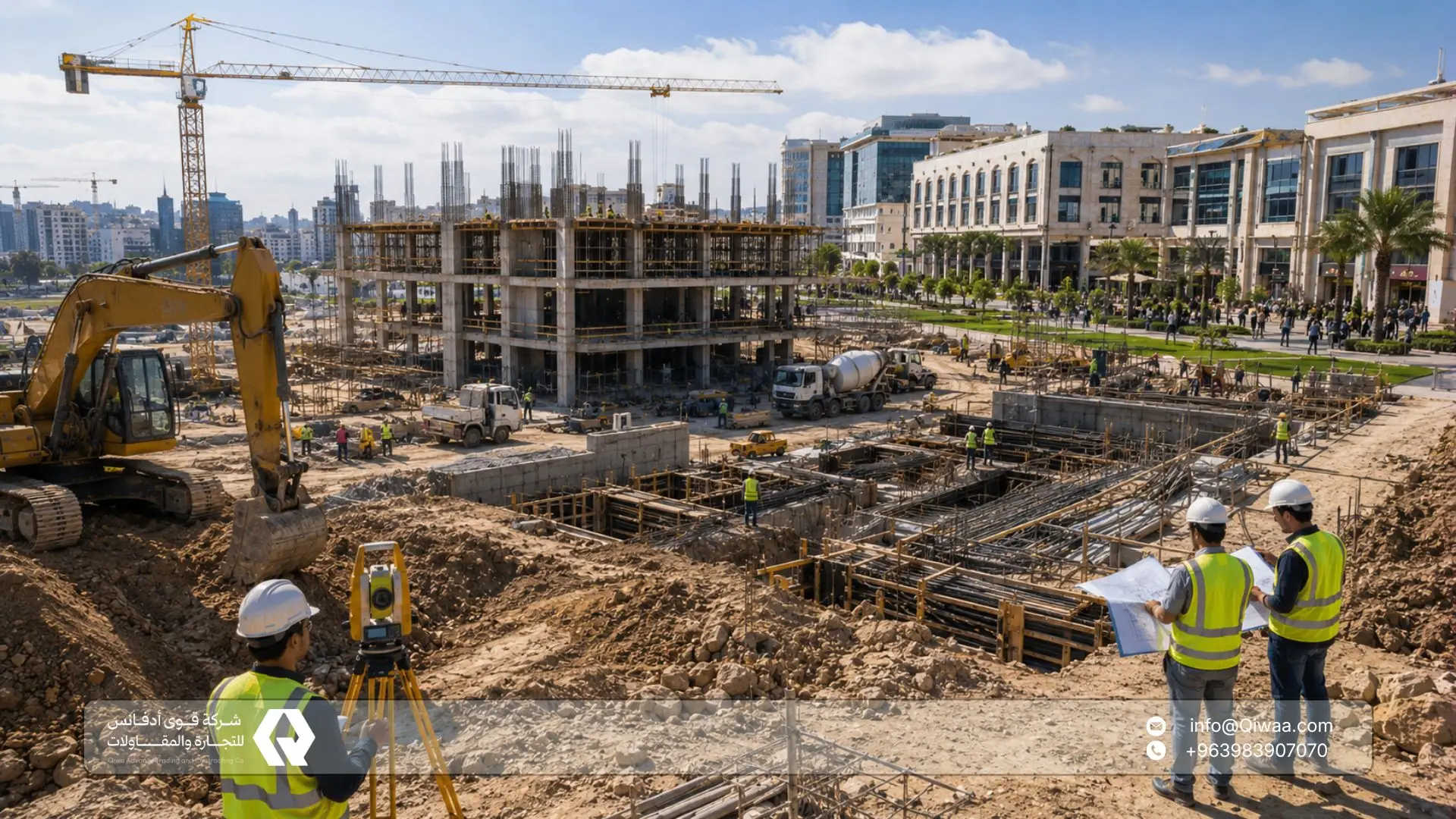
Rebar, cement, and concrete block prices in Syria in 2026
Rebar, cement, and concrete blocks are among the essential building materials in Syria, but their prices are quoted using different units and specifications. For contractors and project owners, understanding these differences is necessary to estimate material costs and compare prices against the project’s bill of quantities (BOQ).
Rebar cost per tonne
The steel price in Syria is commonly quoted per metric tonne, but the price must correspond to the reinforcement grade, bar diameter, and other requirements specified in the approved structural documents.
A price per tonne provides a useful basis for budgeting only when it matches the material the project actually needs. The procurement team can then apply the quoted rate to the approved reinforcement quantities, distinguishing the material cost from any additional delivery expenses.
Cement cost per tonne or bag
The cement price in Syria may be quoted per tonne or per bag, depending on the supply format. For standard 50 kg bags, one metric tonne equals 20 bags, allowing buyers to calculate the equivalent unit price when comparing quotations for the same cement specification.
However, bagged and bulk cement may have different packaging and handling costs. The project’s required cement type, strength class, and supply format should therefore be established before applying the quoted price to its material quantities.
Concrete Block cost per piece or thousand
The concrete block price in Syria is generally quoted per piece or per thousand units. Prices should be assessed against the specified block dimensions, type, and performance requirements, since different blocks cannot be treated as equivalent solely because they are sold by the same unit.
For budgeting, the required number of blocks should be calculated from the approved masonry quantities, with an appropriate allowance for cutting and breakage where needed. A quotation per thousand blocks can be divided by 1,000 to establish the equivalent price per piece.
Across these three material categories, the objective is to connect the quoted unit price with the quantity and specification recorded in the BOQ. This allows the project team to estimate costs consistently without treating unlike products or pricing units as directly comparable.
Read also: Reconstruction Companies in Syria 2026: How to Choose a Reliable Reconstruction Firm
How to use building material price bulletins in Syria
Published building material prices in Syria can help contractors, developers, and procurement teams monitor market movements and identify when cost estimates may need updating. However, a price bulletin is a dated market reference, not a confirmed quotation for a specific construction project.
To interpret a bulletin correctly, each price entry should identify its publication date, reference location, product specification, pricing unit, currency, and delivery basis. Missing information makes it difficult to determine whether an apparent price change reflects the market or simply a difference in what was quoted.
The following table shows the information needed to track prices consistently across major construction materials:
| Material | Information to record from the bulletin | What can affect price comparability |
|---|---|---|
| Reinforcing steel | Price per tonne, steel grade, diameter, location, and quotation date | Different reinforcement specifications or delivery terms |
| Cement | Price per tonne or bag, cement specification, bag weight where applicable, and location | Differences between bagged and bulk supply or cement grades |
| Concrete blocks | Price per piece or thousand, block dimensions, type, and location | Different sizes, specifications, or quantity bases |
| Sand | Price per cubic meter, source, material specification, and location | Unspecified truckload volumes or differences in material grading |
| Gravel | Price per cubic meter, aggregate size, source, and location | Different aggregate specifications or measurement methods |
| Ready-mix concrete | Price per cubic meter, specified concrete mix, location, and quotation date | Different mix requirements or inclusion of pumping and delivery services |
For ongoing price monitoring, compare successive entries only when the material specification, pricing unit, and reference location remain consistent. A change in any of these details can make the apparent increase or decrease misleading.
When preparing a project budget, the procurement team should then obtain a current supplier quotation covering the actual quantities and delivery location. This separates market price monitoring from the cost the project can expect to pay.
What drives building material prices in the Syrian market?
The cost of construction materials in Syria is shaped by production conditions, imported inputs, distribution capacity, and demand from building and reconstruction activities. These influences do not affect every material equally: cement depends heavily on manufacturing energy and clinker availability, while reinforcing steel and finishing products may respond differently to international markets and supply conditions.
The main market factors include:
- Exchange rates and imported inputs: Currency movements can change the cost of imported materials, equipment, and production inputs purchased in foreign currencies. Their effect on local selling prices depends on suppliers’ costs and commercial arrangements.
- Energy and manufacturing costs: Electricity, fuel, and other operating expenses influence the cost of producing cement, concrete products, steel products, and certain finishing materials. Production interruptions can also affect output and availability.
- Production and supply capacity: Factory operations, access to raw materials, import availability, and distribution capacity influence how much material reaches the market. Supply constraints can place upward pressure on prices when demand remains strong.
- Transport and regional distribution: Fuel costs, transport capacity, road access, and distance from production or storage facilities can create price differences between Syrian governorates.
- Construction and reconstruction demand: Residential development, infrastructure works, and rehabilitation projects generate demand for different materials at different stages. Increased purchasing activity can affect prices and lead times, particularly when supply cannot expand at the same pace.
- Seasonal and project-related demand: Weather conditions, construction schedules, and the timing of major projects can change purchasing activity during the year. Their impact depends on the material and local market conditions.
Understanding these factors helps project owners distinguish between a broader market movement and a cost change affecting a particular material or location. This is especially important when updating construction budgets over several project phases.
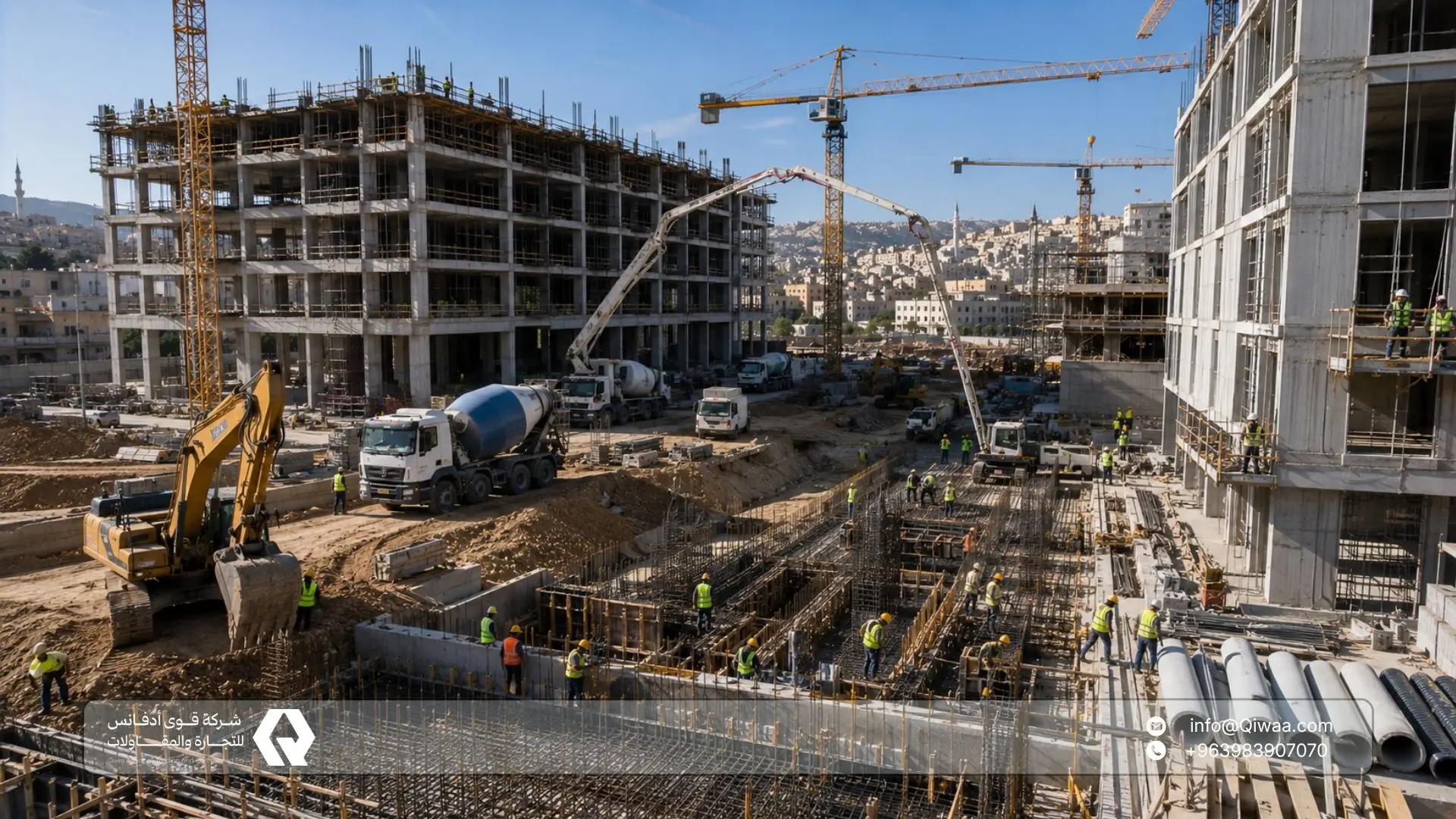
Integrated construction services in Syria
Construction and reconstruction projects require several specialized services, from engineering assessment and design to contracting, material supply, technical supervision, and finishing. The responsibilities of each party depend on the project’s scope and delivery model, making coordination essential to keeping approved designs, procurement, and site execution aligned.
Engineering consultancies and technical supervision
Engineering consultancies provide the technical foundation for construction projects in Syria. Depending on their scope of appointment, their work may include site assessments, structural and architectural design, technical specifications, drawings, and supervision of construction activities.
For rehabilitation projects, an assessment of the existing building’s condition is particularly important before defining repairs or structural interventions. During execution, the appointed engineering team may also review materials, inspect completed works, and assess proposed changes against the approved design.
Construction contracting and material supply
Construction contractors execute the agreed works, organize site activities, and coordinate labor, equipment, and subcontractors according to their contractual responsibilities. Material suppliers, meanwhile, provide the products and quantities required for construction.
These functions must be connected through approved specifications, procurement schedules, and clear responsibilities for receiving and inspecting materials. Depending on the contract, engineering, procurement, and construction may be managed by separate parties or coordinated through an integrated delivery arrangement.
Interior design and fit-out services
Interior design and fit-out firms in Syria support the planning and execution of interior spaces, including finishes, lighting arrangements, interior fixtures, and the coordination of architectural and building-service elements.
Although fit-out installation generally occurs during later construction stages, important design decisions should be made earlier. Ceiling layouts, lighting positions, electrical outlets, plumbing connections, and material selections can affect work that must be completed before finishing begins.
Early coordination between interior designers, engineering consultants, and contractors can reduce avoidable modifications and help align finishing requirements with the approved budget and execution schedule.
Real-estate development and project management
Real-estate developers and project managers have different responsibilities from engineering consultants and construction contractors.
- A real-estate developer typically leads the commercial development of a project, considering land or property rights, financing, intended use, investment feasibility, approvals, and eventual sale or operation.
- A project manager, when appointed, coordinates the delivery process by tracking schedules, budgets, responsibilities, and communication between the parties involved.
Understanding these roles helps project owners identify which services they need and which responsibilities must be covered by their contracts.
Setting Up a contracting company in Syria
Establishing a contracting company in Syria involves more than commercial registration. Entrepreneurs and investors must define the company’s intended activities, select an appropriate legal structure, and identify the professional and regulatory requirements relevant to the construction projects they plan to undertake.
In September 2026, Syria introduced a new Contractors Classification System, covering six construction specializations and seven classification categories. The framework assesses contractors based on technical experience, financial capacity, equipment, and qualified personnel. Companies should verify the applicable registration, professional membership, classification, and tender eligibility requirements with the relevant Syrian authorities.
Beyond regulatory compliance, a contracting business needs qualified technical personnel, suitable equipment, financial resources, and reliable arrangements for procuring building materials in Syria. These capabilities should match its intended activities, whether residential construction, building rehabilitation, infrastructure, or specialized contracting. Commercial registration alone does not establish eligibility or capacity to undertake every category of construction project.
Companies to Compare in Syria’s Reconstruction and Building Materials Sector
Construction and building materials companies to compare in Syria
Companies working in reconstruction and building materials in Syria differ in their capabilities and business activities. Some focus on general contracting, others specialize in infrastructure or engineering works, while integrated companies may combine construction services with material sourcing and supply.
The following businesses provide examples of companies identified through published corporate information or Syrian business directories. This is not a ranking, an endorsement, or confirmation of their current licensing, availability, or capacity to undertake new projects in 2026.
| Company | Publicly described business activities | What to verify for your project |
|---|---|---|
| Qiwaa Advance | EPC contracting, infrastructure solutions, and construction and industrial material supply | Relevant service scope, proposed execution model, and project-specific supply arrangements |
| Al Din Contracting Co. | Construction services, construction products, and property development | Relevant completed projects, current operating capabilities, and geographic coverage |
| Middle East Contracting (Hamsho Group) | Building construction, roads, and public utility works, according to its published directory profile | Current company status, contractual identity, and relevant project experience |
| Al-Nour Contracting and General Trading Company | Engineering and contracting activities listed in Syrian business directories | Exact registered identity, recent references, and available technical resources |
| Ramadan and Moussalli General Contracting | Road, bridge, sewerage, and water network works | Eligibility and demonstrated experience for the required infrastructure scope |
| Damas Building Technology | Industry, trading, and contracting activities | Specific contracting and supply capabilities relevant to the project |
These examples illustrate the range of businesses a project owner may encounter, but their activities are not automatically interchangeable. A company specializing in infrastructure works may not be the appropriate choice for interior fit-out, while a material supplier should not be assessed as though it were responsible for engineering design or construction supervision.
Before adding any company to a formal tender or procurement shortlist, independently confirm its current legal standing, relevant experience, operating capacity, and willingness to undertake the specified work.
The final comparison should be based on documented proposals for the same project scope—not on company names, promotional descriptions, or a general industry directory alone.
How to start a construction project in Syria
Starting a construction or reconstruction project in Syria requires a clear sequence of technical, financial, and contractual decisions. Whether the project involves a new building, an existing structure, or infrastructure works, the following steps help project owners move from initial planning to execution and handover.
- Define the project scope and objectives: Establish whether the project involves residential, commercial, industrial, infrastructure, or rehabilitation works. Identify its intended use, approximate scale, initial budget, and available financing.
- Verify ownership and site conditions: Review property rights, land-use restrictions, legal constraints, site access, and available utilities. For rehabilitation projects, identify the condition of existing structures before deciding which works are feasible.
- Appoint the engineering team: Engage qualified consultants to conduct the necessary surveys and technical assessments, develop the initial design, and determine the project’s engineering requirements.
- Confirm approvals and finalize the design: Establish the applicable zoning, permitting, and approval requirements with the relevant authorities. Complete the drawings and technical specifications required for the proposed works before construction begins.
- Prepare the bill of quantities and cost estimate: Develop a measurable bill of quantities (BOQ) based on the approved design. Estimate construction costs, including materials, labor, equipment, subcontracted works, transport, and appropriate contingencies.
- Select the contractor and delivery arrangement: Obtain comparable technical and commercial proposals based on the defined scope. Assess the contractors’ qualifications and resources, then select an arrangement that clearly allocates execution and coordination responsibilities.
- Finalize the contract and execution schedule: Document the agreed scope, prices, payment milestones, completion dates, quality requirements, responsibilities, and procedures for approving variations before authorizing the works.
- Plan material procurement and delivery: Organize the required building materials in Syria according to the approved quantities and construction schedule. Account for procurement lead times, delivery access, receiving arrangements, and suitable storage conditions.
- Supervise construction and control changes: Monitor progress, quality, safety, and compliance with approved drawings through the appointed project and engineering teams. Record inspections, address nonconforming work, and obtain the required approvals before implementing design changes.
- Inspect, commission, and hand over the project: Complete the required inspections and tests, commission applicable systems, resolve outstanding defects, and collect the necessary handover documentation before final acceptance.
The sequence and approval requirements may vary by project type and location, but each stage should have clearly assigned responsibilities and documented deliverables before the project advances.
How Qiwaa Advance supports reconstruction and building materials projects
At Qiwaa Advance, we support contractors, developers, and project owners undertaking construction and reconstruction projects in Syria. Our services cover construction execution and material sourcing, helping clients address the practical requirements of their projects through capabilities aligned with the scope of work.
Through Qiwaa Contracting, we provide Engineering, Procurement, and Construction (EPC) services for infrastructure and construction projects. Our areas of work include concrete structures, water networks and treatment facilities, building rehabilitation, and specialized construction solutions. The appropriate execution arrangement depends on the project’s technical requirements, design, and contractual scope.
Our Qiwaa Trading division suports the sourcing and supply of construction, industrial, and infrastructure materials through relationships with manufacturers and suppliers. We also provide supply-chain and logistics services, helping clients consider material availability, procurement requirements, and delivery arrangements in relation to their construction schedules.
Whether your project requires construction services, material supply, or both, we can discuss the relevant requirements and identify which of our services may fit the proposed scope. Sharing the project location, current development stage, available drawings or bill of quantities (BOQ), material requirements, and expected timeline provides a starting point for those discussions.
Contact Qiwaa Advance to discuss your construction or reconstruction project in Syria and explore the contracting and material supply services relevant to its needs.
FAQs about reconstruction and building materials in Syria
What types of projects are included in Syria’s reconstruction?
Reconstruction in Syria includes repairing and strengthening damaged buildings, replacing structures that cannot be rehabilitated, restoring infrastructure and public services, and redeveloping affected areas. The technical requirements and investment arrangements depend on each project’s condition, location, and intended use.
How do I choose a construction or reconstruction company in Syria?
Compare construction companies in Syria based on relevant completed projects, technical capabilities, legal standing, and experience with the required work. Request a documented proposal that defines the scope, responsibilities, schedule, and commercial terms rather than relying on company names or unverified rankings.
Where can I find current building material prices in Syria?
Published price bulletins can provide dated market references for steel, cement, concrete blocks, and other building materials in Syria. However, prices vary by specification and delivery conditions. Obtain current supplier quotations for your project’s actual quantities and location before using them in a purchasing decision.
How do I start a construction project in Syria?
Begin by defining the project scope, verifying property rights and site conditions, and appointing the appropriate engineering team. Confirm the required approvals, prepare the drawings and bill of quantities (BOQ), then select the contractor, finalize the contract, and organize procurement and construction supervision.
How does reconstruction differ from new construction in Syria?
Reconstruction involves existing or damaged buildings and infrastructure, often requiring condition assessments, repairs, strengthening, or replacement. New construction generally begins with developing a proposed structure or facility. Both require suitable engineering design, approvals, materials, and execution arrangements.
Are announced reconstruction projects in Syria open to private investors?
Not necessarily. A publicly announced project or investment agreement does not automatically mean participation is available. Investors should verify the project sponsor, current status, investment structure, property rights, financing arrangements, and applicable approvals before considering a commitment.
Who is responsible for engineering, material procurement, and construction?
Responsibilities depend on the project’s delivery model and contracts. Engineering consultants may handle design and technical supervision, procurement teams arrange material sourcing, and contractors execute the agreed works. Under an Engineering, Procurement, and Construction (EPC) contract, these functions may be coordinated through a single contracted entity.
When should building materials be purchased for a reconstruction project?
Material purchasing should follow the approved specifications, bill of quantities, and construction schedule. Long-lead items may require early procurement, while materials sensitive to storage conditions should be delivered closer to their intended use. The procurement plan should balance availability, storage capacity, costs, and the risk of construction delays.